

PSHE
Our EYFS students are currently delving into the fascinating world of oral health. Recently, our Reception class had a visit from a dentist, who also happens to be one of our students’ parents. During this special visit, the children had the opportunity to learn about the significance of maintaining healthy teeth and gums, as well as various oral care routines such as brushing techniques, flossing, and the importance of a balanced diet.
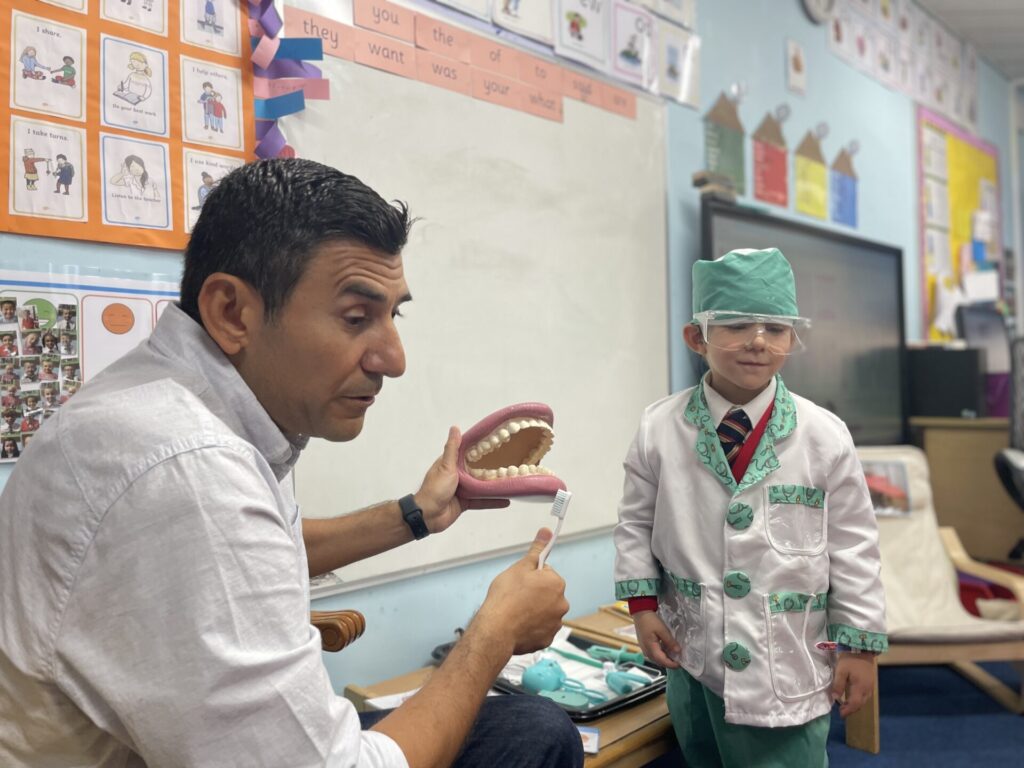
Promoting oral health in early years is essential to protecting young teeth and establishing good habits. It is also a requirement of the EYFS guidelines:
“All settings must promote the good health, including oral health, of children attending the setting.”
Why oral health is included in the EYFS framework:
This has been included because good oral health habits need to be formed from the earliest age. Tooth decay is largely preventable, but it’s still a serious problem among young children.
Nearly a quarter of 5-year-olds in England have tooth decay, with 3 or 4 teeth affected on average. Tooth extraction is one of the most common procedures for children under 6 in hospitals. Extraction is also the most common reason for hospital admission for children aged 6 to 10. Children from more deprived backgrounds are more likely to have tooth decay.
Information for parents: https://www.dentalhealthcareeoe.nhs.uk/services/oral-health-improvement/early-years/
Children who have a toothache, or need treatment, may have pain or infections. This can have a wider effect and lead to problems eating, sleeping, socialising and learning.
In our EYFS oral health provision, children have access to a collection of fiction and non-fiction books. They can explore oral health through engaging stories and informative texts. We also have a dentist role play area, where children can play and learn about dental care. Our engaging activities include hands-on experiments, interactive games, and creative arts and crafts. These initiatives aim to foster a love for learning about oral health and encourage positive dental habits among our young learners.
Maths
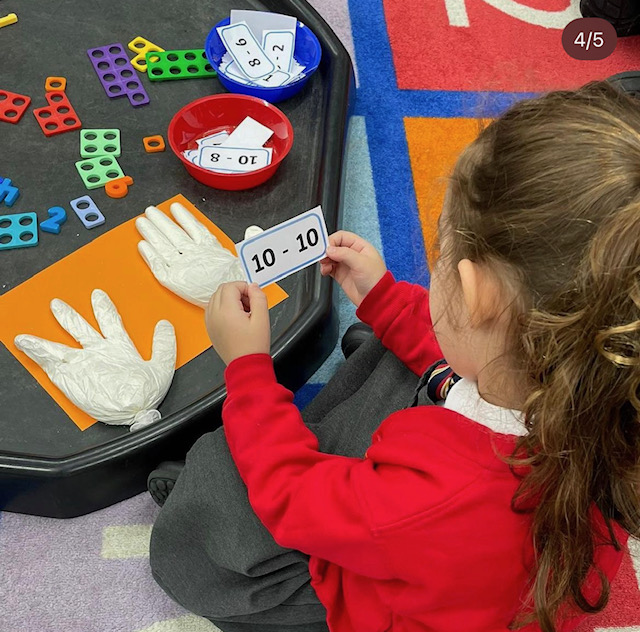
The children in Reception are fully immersed in their ever growing mathematical skills and have not hesitated to challenge themselves with some addition and substraction equations.


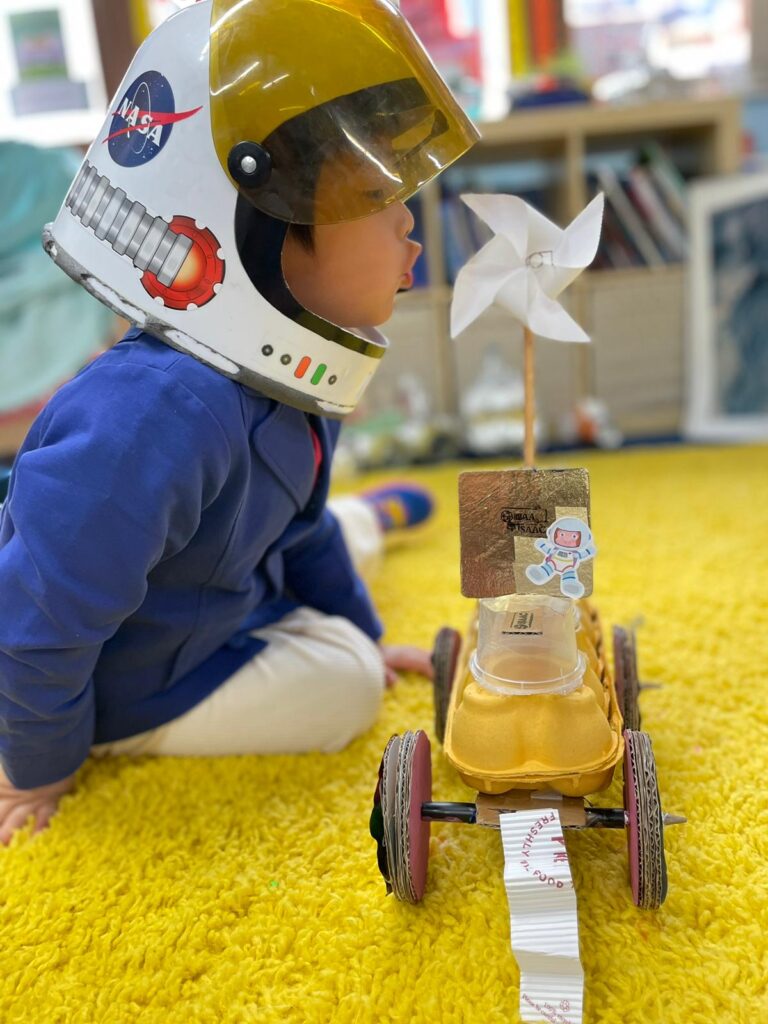
WE ARE GOING TO SPACE!


Understanding the world:
We were delighted to have our first fluffy friend hatched on an early morning! The children were amazed to observe the hatching process and they could not get their eyes off our newborn duckling!
- Fun facts we learned:
- Listen Carefully – you may be able to hear the ducklings cheeping inside the eggs!
- Ducklings have to peck hundreds of times to get out of the egg – you will see a little hole at first, which will grow
and go all around the egg, as they cut themselves a ‘door’. - Some ducklings are quick to hatch and will be out within a few hours. Some are slower and might
take a couple of days. - Do not remove any ducklings from the incubator until they have spent at least three hours recovering from hatching.
- Just before they hatch, they absorb the yolk of the egg into their stomachs and this provides them with enough nutrition to happily go for at least a couple of days without food or water
This term children have been learning about the fascinating world of life cycles. They have not only been exploring the growth and development of plants and animals but they have also looked into changes and growth in the human body. We supported their learning by providing them with age-appropriate books and resources that explore the human body and its functions. This helped them develop a deeper understanding of how their bodies work and how they can take care of themselves. We encouraged the children to make connections between what they learn in the classroom and their daily experiences.


For example, they may notice that they are able to run faster or jump higher as their muscles grow and develop. The children enjoyed looking at pictures of different stages in their life. This activity allowed them to see how much they have grown and changed over time and also helped them to remember special moments and experiences from their past. Looking at pictures also helped children to develop their sense of self and identity. They noticed things about themselves that they didn’t realize before, such as how they have changed physically or how their interests have evolved over time.