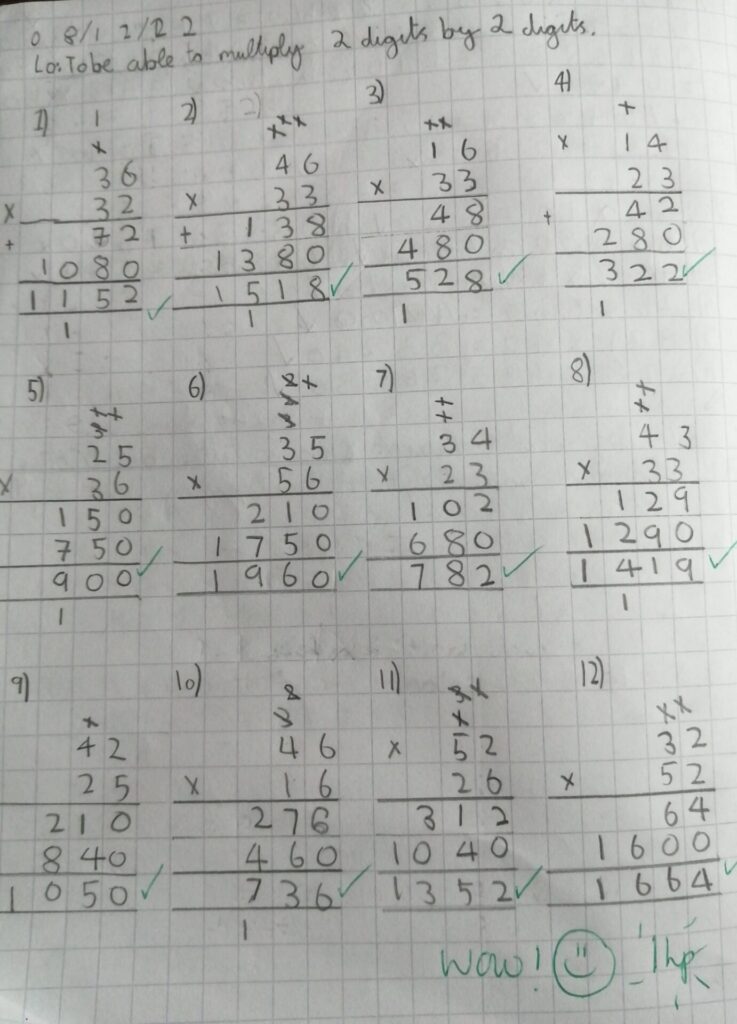
Intent
Mathematics provides children with a wide range of skills that are essential for life. It transcends cultural and linguistic boundaries and equips pupils with a uniquely powerful set of tools to understand and change the world. These tools include logical reasoning, problem solving skills and the ability to think in abstract ways. At Hampden Gurney, we endeavour to ensure that all children develop an enthusiastic, confident attitude towards mathematics and a secure and deep understanding of its application to everyday life. In line with our whole school values, we ensure the children are curious mathematicians who enjoy taking risks. We prioritise enjoyment as the driving force behind children’s engagement as well as a high level of challenge to motivate and stretch all pupils.
The national curriculum for mathematics aims to ensure that all pupils:
- become fluent in the fundamentals of mathematics, including through varied and frequent practice with increasingly complex problems over time
- reason mathematically by following a line of enquiry, conjecturing relationships and generalisations, and developing an argument, justification or proof using mathematical language
- can solve problems by applying their mathematics to a variety of routine and non-routine problems with increasing sophistication
We follow the Maths Mastery approach to teaching mathematics which ensures that all children master the objectives outlined in the maths curriculum and develop a deep understanding of the skills and knowledge.
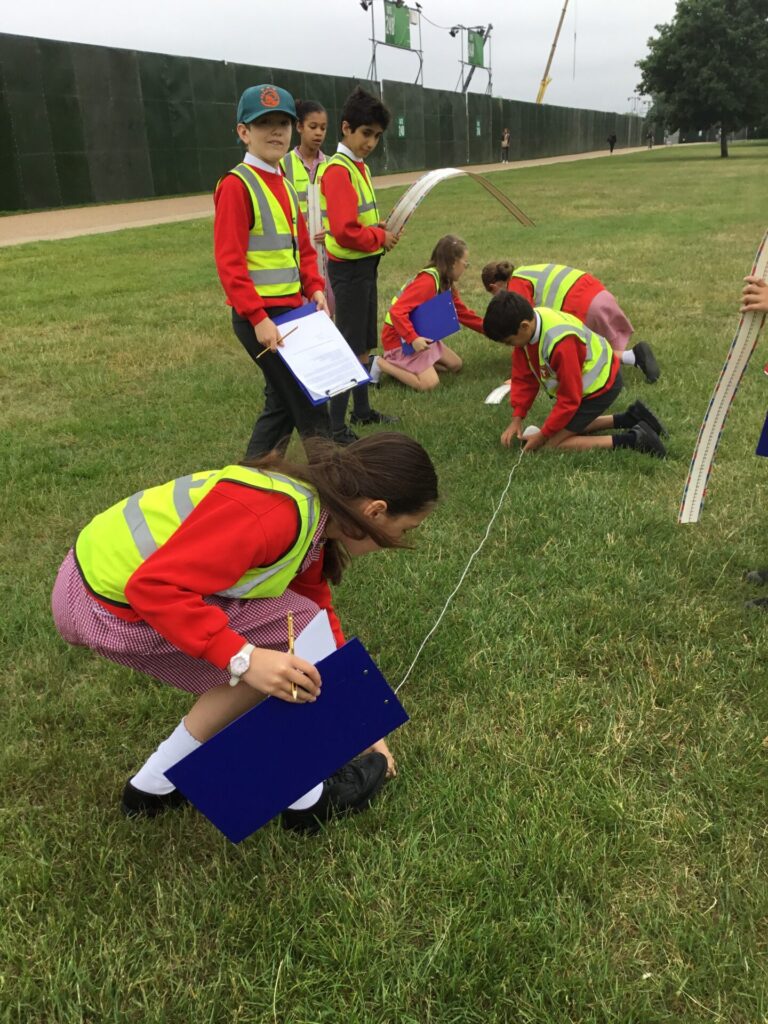
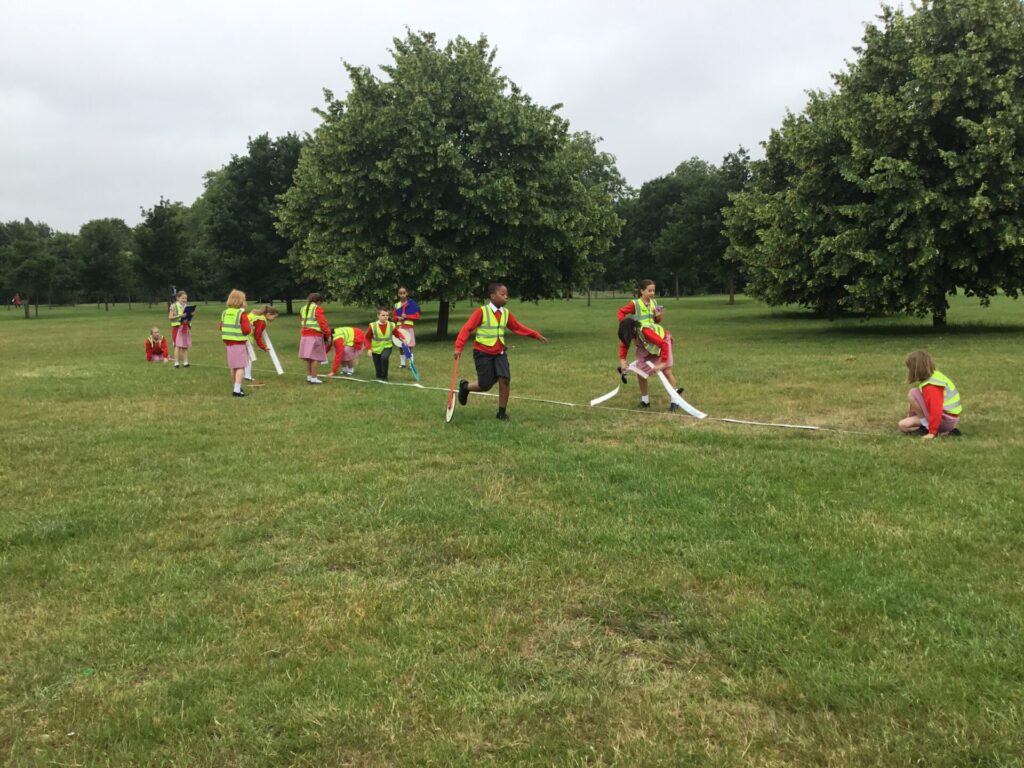
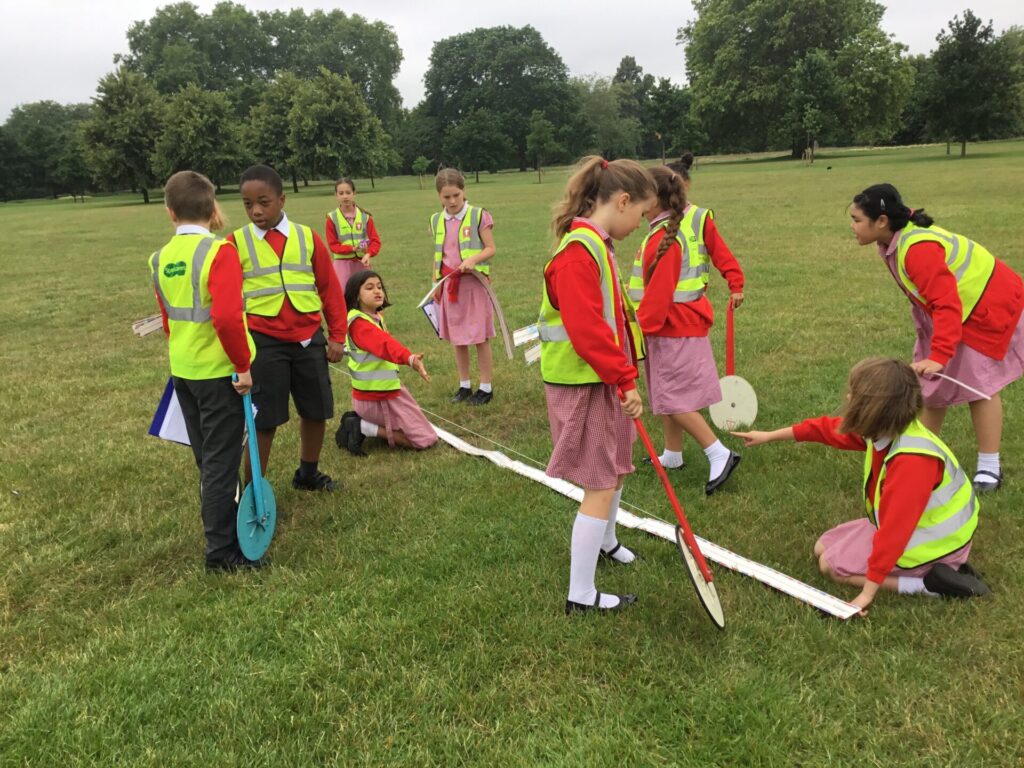
Year 6 Class convert miles to kilometers in Hyde Park
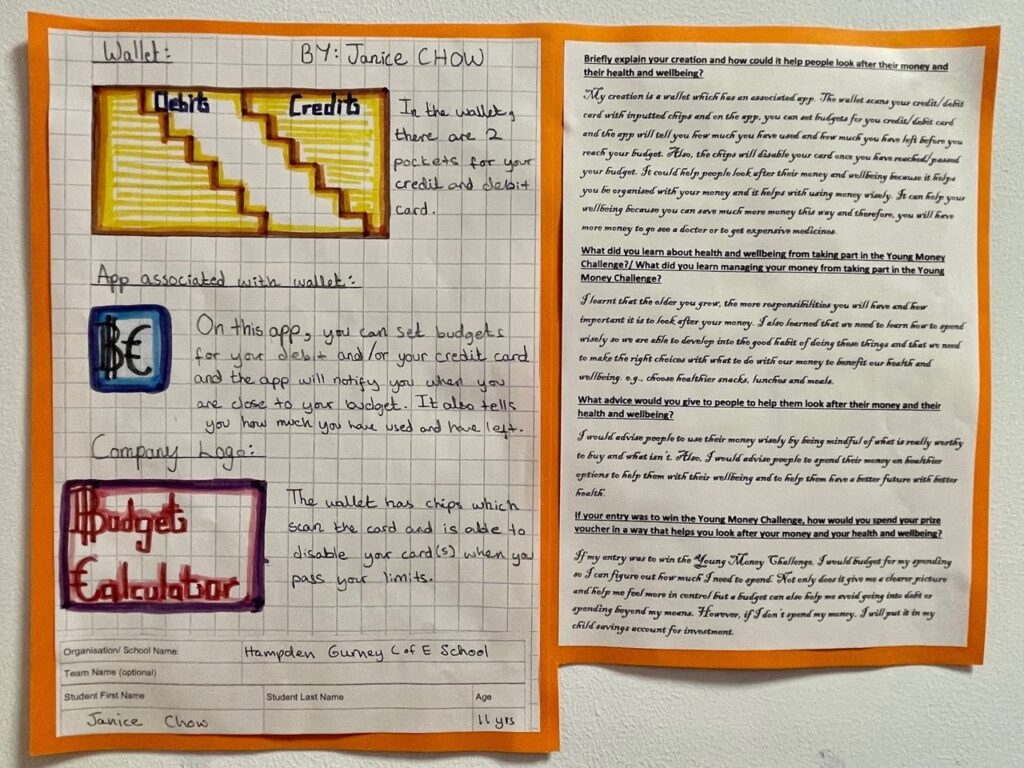
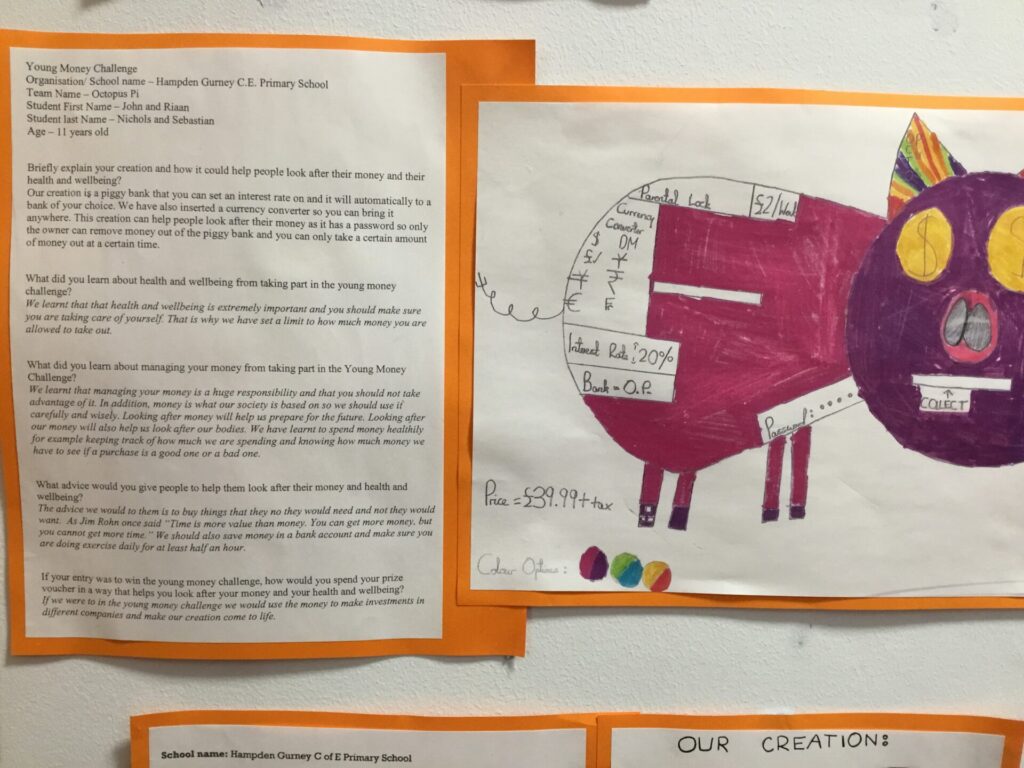
Year 6 Young Money Challenge
Implementation
Our curriculum and scheme of work
At Hampden Gurney, we implement the above by following the Inspire Maths scheme, which is a whole school approach based on the internationally acclaimed approach to teaching Mathematics in Singapore. The development of the curriculum focuses on slow, secure building of mathematical knowledge, with whole-class interactive teaching, high expectations for all and guided and independent practice. This in turn promotes a deep conceptual understanding. The concrete–pictorial–abstract (CPA) approach is woven throughout the curriculum with teaching for both understanding and fluency. There is a consistent use of models and images, such as bar modelling, to support the development of new concepts, which means a secure, long-term, and deep conceptual understanding.
Maths Lessons
Our Maths lessons follow a structure which is comprised of a fluency starter, guided teacher input, paired or group practise, moving on to independent work when secure. The last part of the lesson is a review of what has been taught. Children regularly problem-solve and reason throughout lessons, applying the taught skills and fundamentals of maths in a range of different contexts.
Maths Talk
Throughout every lesson, mathematical discussions are encouraged and prioritised. Key mathematical vocabulary is displayed and referred to and children are helped and encouraged to use this when explaining solutions or reflecting on their own work.
Maths Investigations
We believe in giving children space and time to really consider a range of in-depth problems and therefore conduct investigations regularly throughout each unit of work. This allows children to focus on one in depth inquiry in a lesson, developing their ability to organise their own work, use a range of different heuristics to problem-solve, conjecture relationships, collaborate with each other and share and celebrate successes.

Supporting all learners
All children are supported to achieve their potential and to make as much progress as possible. Concrete resources, models and structures, computer programmes and quality first teaching are used and adapted to suit individual children’s needs. Throughout the week, children who are struggling will be supported using interventions focused on individual targets or same-day group or individual catch-up sessions.
Cross Curriculum links
Wherever possible, the children will apply their mathematical knowledge to other subjects such as Science and Computing, regularly making links and helping children understand the interdisciplinary nature of these subjects. We aim to give all our pupils the knowledge, experiences and ‘cultural capital’ necessary to become educated citizens and to succeed in life. Within the mathematics curriculum, this includes teaching maths that will be used in the world all around us. For example, lessons may be linked to planning projects with money, budgeting, applying percentage, measurements in recipes, and measurement of distance and time. As well as this, we ensure the children have experiences such as: business and enterprise days; themed Maths Days and Maths Weeks; entering inter-school maths challenges; welcoming visitors; and going on school trips linking to maths and STEM concepts.

Impact
At Hampden Gurney, children become enthusiastic, thoughtful mathematicians. They work through a carefully structured curriculum to become fluent with their number facts and key skills and develop a range of useful approaches and tools to draw upon when solving varied and challenging problems. Every child is catered for; all children are challenged, and they are supported where necessary. They work using a variety of resources in order to embed and deepen knowledge and understanding. Teachers constantly assess learning, adjusting and adapting teaching and learning as necessary in order to ensure children make maximum progress. Children leave the school with a curiosity about the world around them, knowledge of the interconnected nature of mathematics and a clear understanding of how maths is used in the world around them.